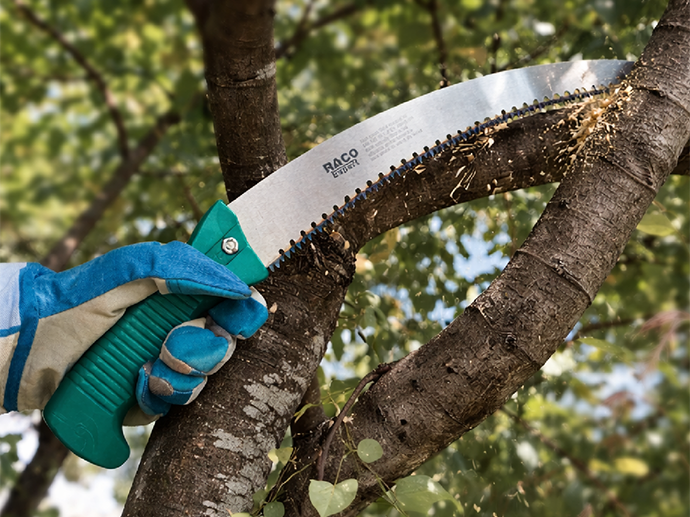
Mastering the Cut
The Essential Guide to Precision Sawing
The Importance of Strategic Sawing
Strategic sawing is the backbone of structural
tree care. When branches exceed the capacity of standard pruners, professional
sawing becomes necessary to manage tree health and safety. Selecting the
specific saw for the job is the hallmark of a professional arborist; using the
correct blade geometry not only increases mechanical efficiency but also
ensures the cleanest possible wound for the tree’s recovery—making the right
RACO saw an essential investment for any garden maintenance program.
Strategic Timing
When to Saw
Dormant Season Structural Work
Late winter provides clear canopy visibility and better control for major structural sawing.
Hazardous Limb Mitigation
Dead, cracked, or hanging branches should be removed immediately to prevent accidents.
Step-by-Step Mastery
How to Saw Like a Pro
01 Tool Selection & Assessment
Match saw type to branch size and cutting environment before starting the operation.
02 Relief Undercut
Create an undercut on thicker limbs to prevent bark stripping during branch release.
03 Primary Drop Cut
Move outward from the undercut and perform the top cut to safely drop limb weight.
04 Final Collar Cut
Remove the remaining stub just outside the branch collar for clean healing response.
05 Sanitation & Removal
Clear cut wood and debris to reduce pathogen risk and keep the worksite safe.
Professional Tips for Longevity
The Sharpness Standard
Sharp, hardened teeth reduce binding and tearing while lowering infection risk.
Advanced Blade Protection
Keep blades clean and protected from rust and resin buildup to maintain consistent cutting action.